
Between a Rock and a… Smaller Rock.

As a counsellor I often find myself reading psychotherapy and mental well being books in order to help me learn and grow professionally. One of the perks of this part of my job is that what I learn through my research tends to rub off on me, thereby contributing to my personal growth and emotional wellness. Funny how…

Over the past few weeks, I’ve been reading and writing about boundary setting because this is an issue that often comes up with clients so I thought it useful to learn and understand more. A couple weeks ago I spoke about being responsible to others and for ourselves, and part of being responsible to others is helping each other as we are able either physically, emotionally, or mentally. In the book I am reading the authors talk about the difference between carrying a burden and a load. Apparently the Greek word for burden means those things that are so heavy they weigh us down and may even crush us like boulders. We need help carrying our boulders – in times when we are facing crisis or tragedy we need others to help us through.

Apparently then, the Greek word for load means cargo, or the things we are responsible for on a daily basis. These are our own feelings, behaviours, and attitudes as well as the things that we are more responsible for carrying on our own with our God given talents, skills, and abilities.

Problems begin to occur when we treat our boulders like daily loads and refuse help, thus putting ourselves through unnecessary pain. Conversely, some of us treat our daily loads like boulders that we don’t think we should have to carry resulting in irresponsibility which can also lead to resentment and frustration in others if they see us shirking our manageable responsibilities off onto them.

One of the keys then is to take an honest look at the boulders and loads in our lives and both allow others the opportunity of growing closer with us by helping us with our boulders, and also free others from the responsibility of carrying the loads we are perfectly capable of carrying on our own.

* The book I am currently reading is called: Boundaries: When to Say Yes, How to Say No to Take Control of Your Life. By Cloud & Townsend.

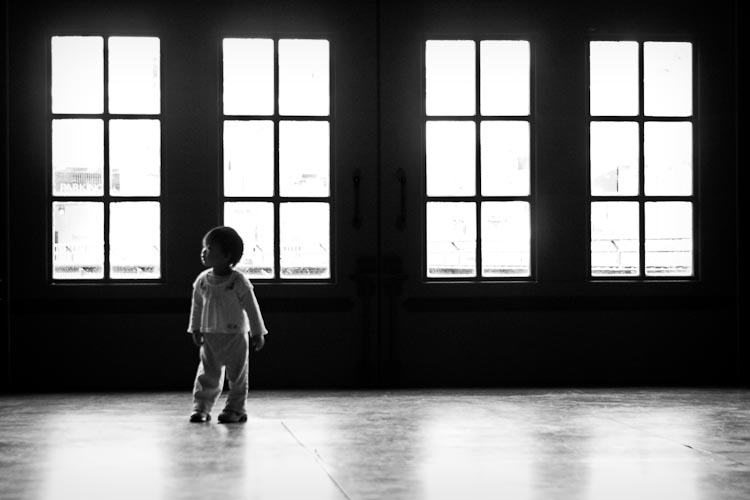
Alone in a Crowded Room

The other day on CBC Radio One they were talking about teen depression and how it’s on the rise. Some stats say that approximately 20% of all teens will experience a major depressive episode before they reach their adult years. I find this information quite disturbing and it makes me wonder why? Why, in a nation where the majority of us have way more than anyone could ever want, let alone, need? Where we have freedom, food, and fresh water? Where we have education, elected government, and employment? Where we have safety, social services, and supermarkets? Where we have so much. so. much. Why are we becoming less and less satisfied, less and less fulfilled, and less and less happy?

I think, and I’ve heard this before, that it’s due, in large part, to us becoming more and more wealthy, independent, and self-sufficient. Because we don’t need others for the practical, we think we don’t need them for the emotional or psychological: And THAT is one of the biggest and most tragic fallacies of our generation (emphasis added). Alfred Adler believed, preached, and propagated that human social connection… real connection… is as essential to human survival as oxygen, food, and water. It seems like we are losing our ability to connect and relate deeply and genuinely with one another: as wealthy westerners we are actually socially regressing, and now suffering the emotional and psychological consequences.

How many of us know our neighbours well? Just the other day I was telling my husband that I’d like to invite the neighbours in our building over for a little open house in order to get to know them better and build some community… his response was that he didn’t feel comfortable inviting a bunch of strangers into our home. Strangers. Since when have our neighbours become strangers? Since when have we become so busy with bustling around thinking we are doing things that matter and then find ourselves having to book time to get together with some of our closest friends days, or even sometimes weeks in advance? It just doesn’t sit well with me.

I think this is a big problem and mental illness is only going to become more and more pervasive, prevalent, and persistent if we insist on keeping to the delusion that our independence and isolation makes our culture, nation, and generation better off, and provides us with some kind of superior quality of life.