
If Only…

According to research, the life circumstances in which we find ourselves; meaning that whether we live in a mansion or a trailer, on the sunny southern west coast or the bitterly cold prairies, our degree of beauty or plainness, our fitness level or body mass index, or whether we are married or single makes up only about 10% of our sense of well-being and happiness. In theory, then, this means that we can spend the better part of our adult life scrimping, saving, and stressing over every dime spent in order to one day afford our dream home with an ocean view which we believe will make us so much more happy in life, when it actuality it really won’t.

The bad news is that the most glorious pair of black patent stilettos, the perfect breezy summer party dress, a wrinkle free forehead, an ideal waist-to-hip ratio, or the newest iphone, signed hockey jersey, biggest television screen, or fastest BMW will not actually make us noticeably happier. So if an increase in happiness level is what we seek by the acquisition of such things, our efforts are relatively futile. The good news is that the most glorious pair of black patent stilettos, the perfect breezy summer party dress, a wrinkle free forehead, an ideal waist-to-hip ratio, or the newest iphone, signed hockey jersey, biggest television screen, or fastest BMW will not actually make us noticeably happier. So if we lack the means to acquire such things without then being obligated to pay for them for the next 35 years, all is not lost for we will be no more miserable in their absence.

When found reflecting on our lives and the circumstances in which we find ourselves many of us are often apt to use the phrase if only [insert your hearts desire here] then I would be [insert your most desired emotional outcome here]… Well, as it turns out research shows us that our if only phrase is almost always destined to end with: I will feel pretty much exact same as I do now in a few short days, hours, or even minutes.

I don’t know, maybe it’s just me but I find this information incredibly liberating.

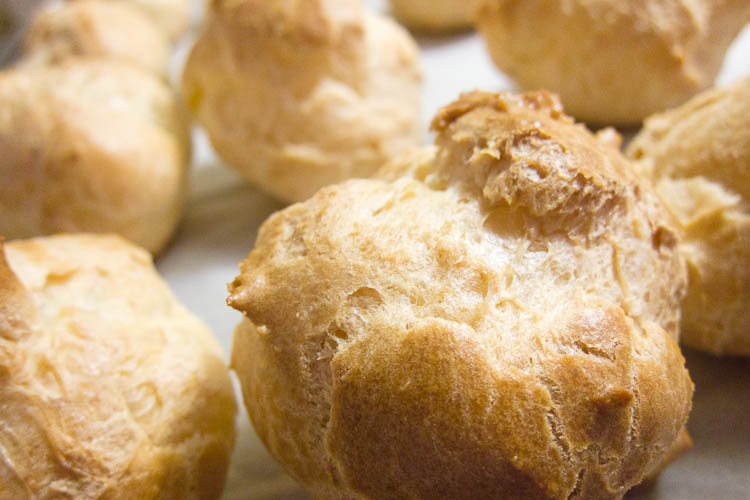
All Puffed Up.

This weekend I’m going to be giving a short speech, and I was asked by the event coordinator to provide her with a short bio about me to be read in my introduction. Now I felt a little funny writing about myself and the things I’ve done to get to where I’m at in my life and career until this point. I don’t know, maybe it’s because of the Scandinavian value of humility that’s been drilled into me since childhood, but whatever the reason, it felt weird so I reached out and asked a good friend to help me with this one by writing the short bio for me. She graciously agreed without hesitation, and I have to say it was one of the best decisions I have made in a long time. She just sent what she had written, and I was absolutely blown away. Not only is this friend a very talented, eloquent, and beautiful writer, but her words were about me… if only part of what she wrote is true… I was so touched and moved, almost to tears. It made me feel so loved and valued.

So this led me to think: Why do we typically only get to have expressed what people value and esteem in us during the eulogy at our funerals when we’re not even there to hear it, or accept their gift with grace and honour?” It seems a little silly to me.

So what I’m challenging, if you’re up for it, and believe me it’s worth it, is for you to reach out to a loved one and ask them if they will take some time to sit down and write a short paragraph about you. Maybe even frame it as “Let’s say you are going to introduce me to a group of people who don’t know me, and you want to tell them some of the things you notice and appreciate about me that you want them to know.” They don’t have to write a novel, just a short paragraph or two… and you can also tell them that they don’t have to worry about covering everything about you. That might take the pressure of forgetting something off of them. It’s a really powerful experience, and it will likely make you feel closer to both yourself and that person.

I think I’m going to print my little paragraph and keep it close by at all times, and then read it every time I feel like I’m lacking in value or significance. It’s pretty hard to feel crummy after reading something like that.

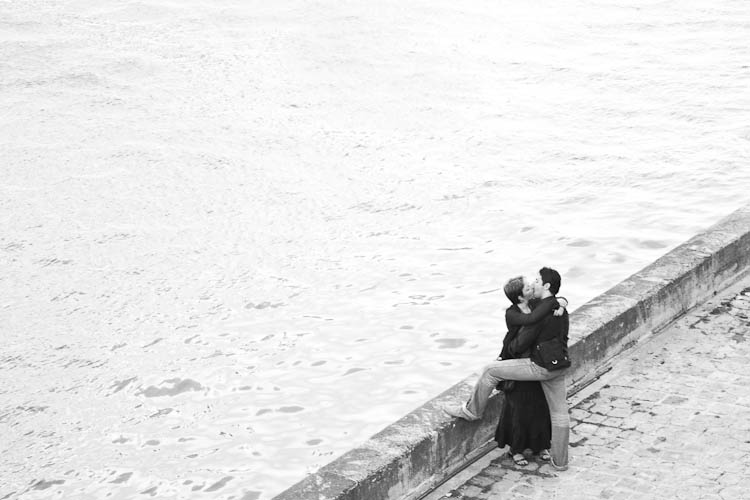
Happily Ever After?

The myth of romantic love as propagated by our culture is that we are destined to meet, fall in love, and live happily ever after with the one. This illusion first starts to take shape when were we children reading and watching fairy tales of beautiful princesses meeting and falling in love with their handsome princes. I think as adults all of us secretly hope or hoped that when we meet or met the right person, we would live happily ever after in perfect union and harmony, and since the match is perfect, we would be able to satisfy all of each other’s needs forever and ever. What seems like an innocent fantasy of ball gowns, horse-drawn carriages and swooning princes is actually quite influential in perverting and distorting our perception of love.

It comes as quite a shock when we start to experience that our beloved prince or princess no longer seems to want to satisfy all of our needs as they did when we were under the spell of falling in love. Friction starts to arise, we no longer feel perfectly in sync, we fall out of love, and then begin to plague ourselves with the dreadful thought that we may have made a mistake and did not, in fact, end up with our one true love, our soul mate. We start to believe that maybe what we thought was love was not actually the real thing and are now doomed to either live unhappily ever after or get divorced.

This myth of romantic love is a dreadful lie. And although this commentary is a simplistic explanation, there are countless couples who are either ashamed of the fact that they are no longer in deeply romantic love with their partner (a stage in most healthy relationships that is only present for a time at the beginning) and thus put on a image of marital bliss for others, meanwhile experiencing deep sadness or depression around the fact that their relationship is not what it appears to be. Or they may say to themselves “I am no longer as in love with my partner as I was in the beginning, therefore I must have chosen the wrong person,” which also leaves one with feelings of sadness, depression, and regret.

At the same time, there are lots and lots of couples who invest in, work on, create, and experience long-term or life-long mutually satisfying, healthy relationships. What’s the secret? If the fairy tale version is not love, what is?

What does it take to love someone and stay committed to them? I’m interested to hear what my readers have to say about their views on love. Please share by leaving a reply just below.

Taming the Beast.

Anger is quite a powerful little 5 letter word that means very different things to different people. For some it is an emotion that is rejected or avoided at all cost and understood as evil, bad, or unacceptable. For others it is all too present and readily available to use to hurt, damage, or destroy – sometimes irreparably so.

Anger, like most emotions, is not a bad or shameful emotion in and of itself. It can even be very appropriate and useful at times. Without anger as a motivator for action we might feel less compelled to fight against injustice, oppression, and discrimination with the same degree of will and determination.

Anger can also give us a very clear sign that something is wrong. Anger feelings directed toward another provide us with a clear indication that someone has done something to threaten or injure something vulnerable inside of us. Further to this, anger is often referred to as a secondary emotion – an overt reaction serving to protect something internal. So what does all this mean Julia? Anger can be an absolutely invaluable resource if we learn how to use it to our advantage. When we notice ourselves getting angry at someone, we can stop and take a second to check in and ask ourselves “What is this anger protecting? If I take a closer look, what am I feeling beneath the anger?” and this will give us some insight into what’s really going on. More often than not the anger is going to be protecting feelings of hurt, or sadness, or fear. By choosing not to react and assault our (often unaware) perpetrator with the anger, (which will likely not only injure the relationship but will also leave us to deal with the aftermath of our own guilt and shame) we give ourselves the opportunity to take a step back, do a check in, figure out what’s really going on and decide if we can express ourselves immediately in a non-aggressive way, or if we need some time to cool off before we can communicate that vulnerable primary emotion. Often, in my experience, the latter works much better.

Easy to say, difficult to do, but like most things worth anything it takes patience, practice, and persistence.