
Not a Four Letter Word

Here’s a little more on assertiveness. Like I said, I’m a big fan of this one.

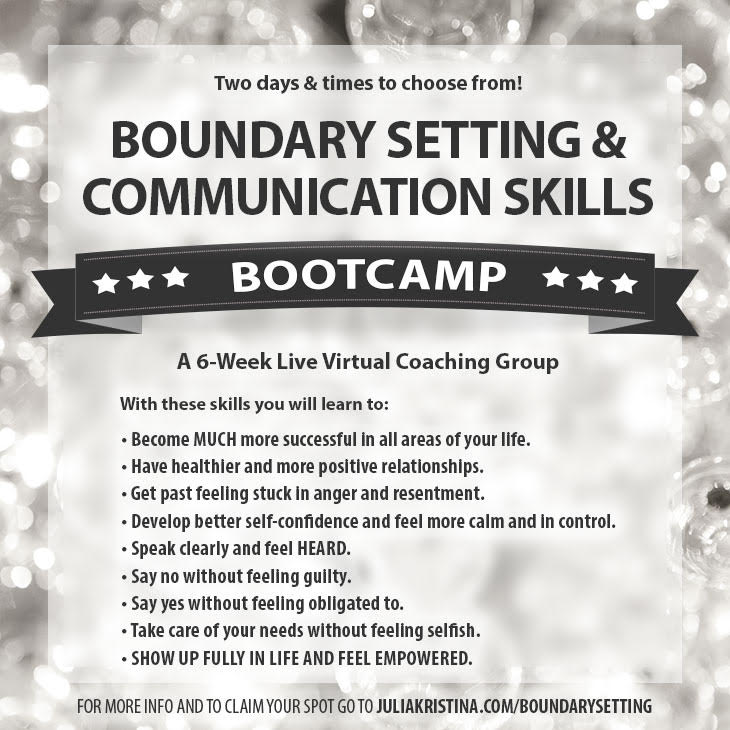
Learning to be assertive is probably one of the most useful communication tools I can think of. It can strengthen our relationships, reduce stress from conflict or having to “suck it up”, and it generally just makes one a happier person. Part of being assertive is learning how to say no. For many of us, no is basically a four letter word, and we try to avoid it at all cost by employing elaborately worded maybe’s or a yes and then a well fabricated excuse at the last minute to wiggle ourselves out. An assertive and polite no is actually very appropriate, and there are no little fibs involved.

Interestingly, I was talking to someone recently who was having some issues with being assertive and setting boundaries and I asked her when she believed it was okay to say no to a request or invitation. She said:

  1. When a family member has died
  2. When one is too sick to get out of bed
  3. When other plans have already been made

Man! That’s it. Any other reasons for no were inappropriate and left her feeling guilty and selfish. She was running herself into the ground by yessing pretty much everything in order to avoid her no.

I’ll tell you, and you may not believe me until you try it, but there is SO MUCH freedom in being able to give AND receive a no. That second part’s important too. We need to allow others to safely use their no with us too. Sans guilt trip, coercion, or judgement. It’s important we are gracious with letting others be who they are, and give ourselves the freedom and grace to be who we are.

Straight Forward.

There seems to be a bit of a misconception with some of us that in order to be a “good” or “strong” person we must not react to upsetting interactions with others, be it friends, family members, roommates, coworkers etc. The whole idea of turning the other cheek - meaning that if someone slaps you across the face you are to turn and present the other cheek for them to continue their assault – doesn’t sit well or really actually make that much sense to me. If the alternative is to smack them back, then no, I’m not proposing that. Not at all. But what about a third option? What about saying to our aggressor “Please do not slap (read: call me down, speak rudely to, yell at) me. I do not like that, and will not tolerate that. If you are angry with me, tell me why you are angry and let’s talk about it, and see if we can work this out. If we are feeling too emotionally charged to talk about this now, let’s plan a time later on when we have cooled off.”

If we are met with some form of aggression, verbal or otherwise, how is it helpful to be a passive recipient of that aggression? If the aggressor learns that he or she can be aggressive or offensive with their words without consequence, opposition, or accountability in any way, shape, or form, how is that helpful to anyone? How are they to know that this type of behaviour is not okay?

Actually, one of the reasons some people react with physical or verbal violence is because they have not really learned how to express themselves in clear and assertive ways with their words, and have thus resorted to physical and verbal violence as a (very destructive) form of communication.

I was working with a woman one time who asked me if I would think she was a bad person if she was to tell her roommate that she doesn’t like being yelled and called down when her roommate is displeased with her.

Pressure’s Off.

“What’s the worst that could happen?”

“They could say No.”

Doesn’t sound like too big of a deal, but to some, ok I guess to most, “no” is a really hard word to hear. When talking about boundary setting, we need to both give ourselves the freedom to say no and also allow others the same luxury. It can be really hard to hear no, especially if we’re banking on a yes. But maybe, just maybe, that person needs to say no more than we need them to say yes.

How to soften the blow of the no? Support networks i.e. more than one go-to person. If we can manage to gather and keep a few close and trusted confidants, the pressure is diminished for all parties involved. Meaning: if we go to one person for support and they honestly don’t have the capacity to give at that particular time, all is not lost, and we won’t be automatically left to deal with our feelings of sadness and doom all on our own. All one must do is go to the next supporter in ones roster and see if they have some available giving capacity. By enlisting a few, we give ourselves more capacity to hear no, and we give others more freedom to say no.